
By HighGround. From the HighGround resource library. Content reviewed on 7 October 2026; unsupported figures and conflicting details have been corrected or omitted.
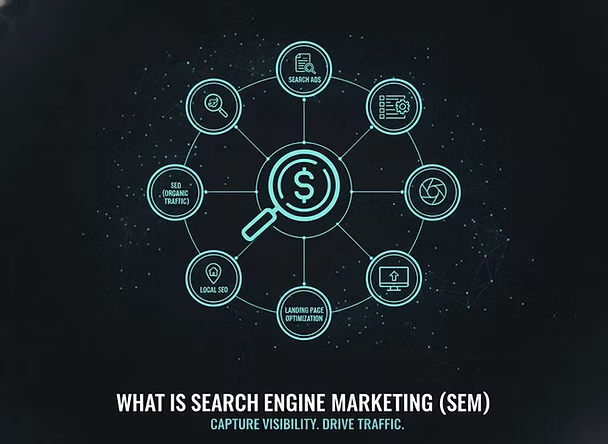
Search engine marketing can connect a business with people actively searching for its products or services. This guide uses SEM to mean paid search, explains campaign planning and measurement, and distinguishes it from organic SEO. Results depend on demand, competition, budget and execution—not a fixed traffic-growth percentage.
Search Engine Marketing Services – What is SEM and how to use it?
In this guide, search engine marketing (SEM) means paid search advertising. Advertisers use platforms such as Google Ads and Microsoft Advertising to reach people searching for relevant products or services.
Paid search can support visibility and customer acquisition, but useful traffic is only part of the objective. Define qualified leads, sales or another measurable outcome before planning a campaign.
What Is SEM?
SEM is paid search in this article. SEO is the separate practice of improving organic search visibility. The two can support the same business goals while using different budgets and methods.
Paid search buys eligible ad placements through an auction. SEO works on organic visibility; purchasing ads does not buy a better organic ranking.
Paid Search and Complementary Campaign Types
Search and search-based shopping placements are central to paid search. Display, video and app advertising are broader paid-media formats that can complement a search strategy; they are not all search campaigns.
Search Ads
Also known as PPC (Pay-Per-Click) ads, these text-based advertisements users commonly see at the top or bottom of search engine results pages when they search for specific keywords related to your products or services.
Display Ads
Display ads are visual advertisements that are shown on websites, apps, and other digital platforms within the advertising network. They range from static images and videos to interactive rich media formats.
Shopping Ads
Shopping ads, on the other hand, showcase your products directly on search engine results pages, complete with product images, pricing, and other relevant information, making it easier for users to find and purchase your products.
Video Ads
Video advertising allows you to promote your brand, products, or services through engaging video content on platforms like YouTube, Facebook, Instagram, TikTok, or other video-sharing websites.
Local Service Ads
Local Services Ads are a distinct Google product for eligible service businesses. Availability depends on country and business category; verify current eligibility rather than assuming the format is available in Malaysia.
Check location coverage, eligibility and any verification requirements on the platform before including Local Services Ads in a media plan.
App Ads
In-app advertising usually uses short, targeted videos or images on other applications to capture user interest. The goal is to drive downloads for the advertised app, which would ultimately expand the app’s user base and brand awareness.
How Ad Auctions Work in SEM
Ad auctions play a crucial role in SEM because they determine the placement and cost of your advertisements. What people don’t see is that when a user searches for a specific keyword or phrase, an ad auction is actually taking place behind the scenes.
Google calculates Ad Rank using bids, auction-time ad and landing-page quality, thresholds, competition, search context and the expected effect of assets. The visible numerical Quality Score is not an auction input. Google’s Ad Rank explanation.
How to Use Quality Score Diagnostics
Quality Score is a keyword-level diagnostic reported on a 1–10 scale. It summarises expected click-through rate, ad relevance and landing-page experience. It is not a business KPI or a direct auction input. Google’s Quality Score guidance.
Use the component diagnostics to investigate relevance and landing-page issues, then judge campaign success through the agreed business outcomes rather than the score alone.
Why Should Your Business Hire an SEM Agency?
An SEM agency can provide additional campaign-management capacity and specialist experience. Check the proposed team, account ownership, reporting and approval process before outsourcing.
A provider can plan tests and optimise campaigns against agreed goals. Results and return on investment are not guaranteed; require clear measurement and an accountable budget process.
Some Search Engine Marketing Strategies
Effective SEM strategies should be tailored to your unique business goals and target audience. Here are some common Search Engine Marketing strategies to consider:
Remarketing: Target users who have previously interacted with your brand by showing them relevant ads as they browse other websites or platforms.
Geo-targeting: Reach users in specific geographic locations, making your ads more relevant and increasing the likelihood of conversions.
Audience Targeting: Leverage advanced targeting options to display your ads to specific demographics, interests, behaviors, and more.
Competitive Analysis: Monitor your competitors’ SEM efforts and adjust your strategies accordingly to stay ahead of the competition.
SEM vs. SEO
| Paid-search SEM | Organic SEO |
|---|---|
| Buys eligible advertising placements through auctions. | Improves organic visibility through technical, content and other SEO work. |
| Requires media spend while ads run; visibility is not guaranteed. | Does not pay for organic clicks; requires ongoing work and resources. |
| Uses paid-campaign targeting and conversion measurement. | Uses search-performance and business-outcome measurement. |
| Can generate exposure after an eligible campaign starts. | Changes can take time to assess; rankings are not guaranteed. |
Top 3 SEM Tools
To succeed in SEM, it’s essential to have the right tools at your disposal. Here are three popular SEM tools used by marketers and agencies:
Semrush
Semrush is a comprehensive SEO and SEM toolkit that provides keyword research, competitive analysis, site audits, and more. What’s great about it is that it offers a wide range of features, including position tracking, backlink analysis, and content optimization tools that can help businesses improve their online visibility and search engine rankings.
Google Ads Keyword Planner
Google Ads Keyword Planner is a free tool offered by Google that helps you find and analyze keyword ideas, its search volumes, and cost estimates for your PPC campaigns. Plus points include historical statistics, traffic forecasts, and suggestions for related keywords, which enable advertisers to refine their keyword targeting and budgeting strategies.
Google Analytics 4
Google Analytics 4 collects event-based website and app data to help understand customer journeys. Use it alongside advertising-platform reporting to investigate on-site behaviour and key events. It does not reveal a competitor’s exact ad spend. Google Analytics documentation.
Continue Learning About Paid Marketing
Explore the related PPC guide for campaign-management fundamentals. HighGround’s current service catalog focuses on link building; this educational article does not imply that SEM management is a listed service.
FAQs
What is SEM vs SEO?
Here, SEM means paid search and SEO means organic search optimisation. Paid and organic work can complement each other, but they are not interchangeable.
Paid advertising is how businesses pay to be seen. It allows you to place targeted ads next to a search that potential customers can easily see. While SEO takes time to build momentum, paid ads offer faster results but require ongoing investment.
What is an example of search engine marketing?
Examples include keyword-targeted search campaigns in Google Ads or Microsoft Advertising. Improving organic content and rankings is SEO, not paid-search SEM in this guide.
Which platforms can I use for paid search?
Google Ads and Microsoft Advertising are two paid-search platforms to evaluate. Compare audience fit, targeting, available campaign types and measured acquisition costs rather than assuming one platform is always cheaper.
What is an example of SEM?
An example of SEM would be a business running a Pay-Per-Click (PPC) advertising campaign on Google Ads, where their text-based ads appear at the top of search results when users search for specific keywords related to their products or services.